Why We Took This Step
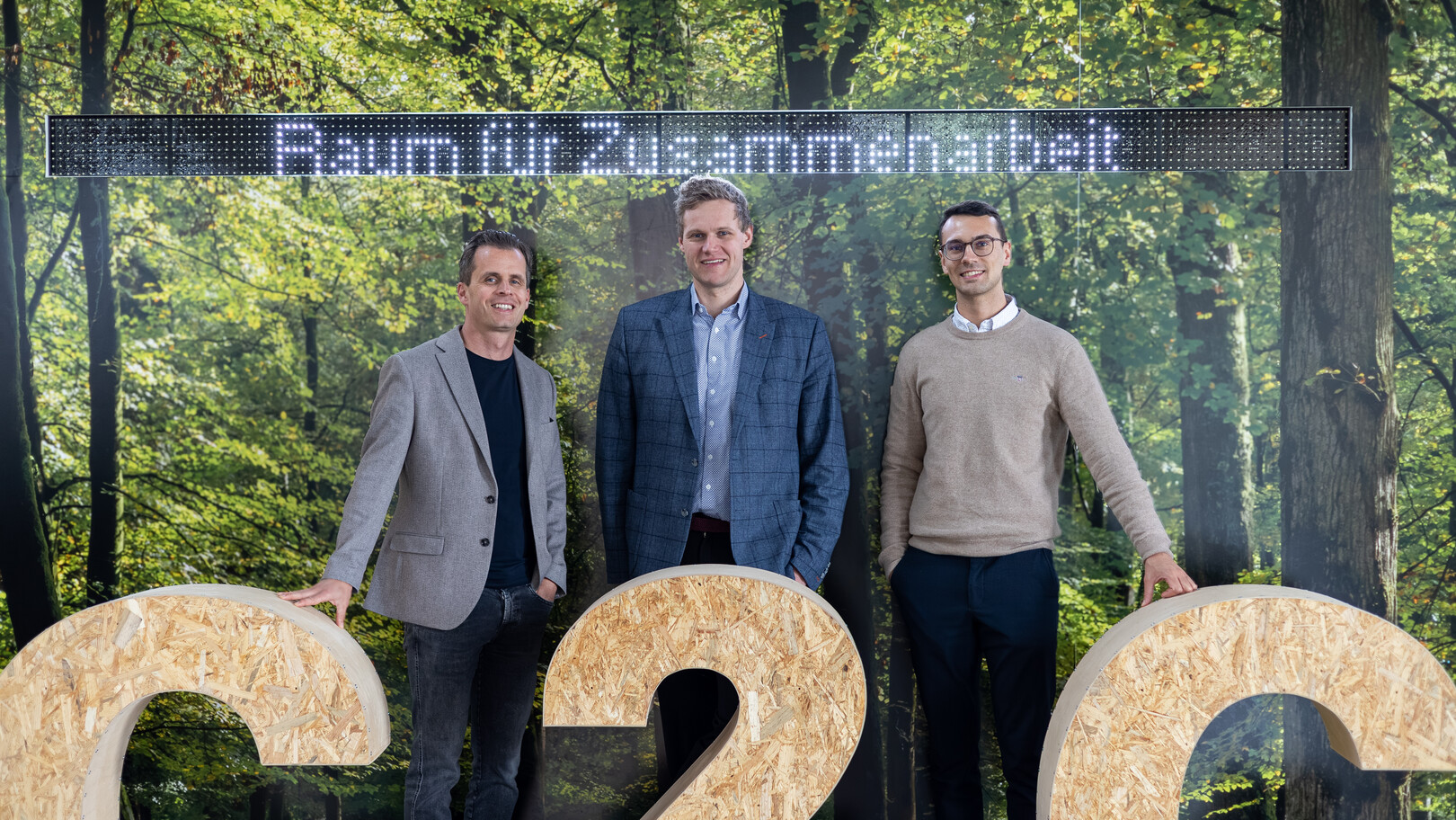
Our CEO, Jan Hendrik Karsch, sums it up: Sustainability has never been an afterthought at WINI; rather, it has always been closely linked to our social commitment, how we treat our employees, and our responsibility to the region in which we are deeply rooted.
Early on, we chose a strategic direction that continues to shape us to this day: the circular economy. Our goal is not to optimize individual metrics, but to develop products in such a way that resources remain in the cycle for as long as possible.
From Many Disparate Solutions to a Clear Structure
The focus is on a unified structure that systematically and transparently brings together key metrics, opportunities, and risks, as well as environmental data and certifications. Previously, this information was scattered across different platforms, stored in various files, and managed by different departments.
Our Deputy Commercial Director, Merlin Otto, describes how sustainability has increasingly become part of his daily work. Sustainability metrics now play a significantly larger role in his responsibilities than they did at the start of his career in controlling.
The impetus came from Sparkasse Hameln-Weserbergland, which introduced us to nawisio, a solution from S-Management Services GmbH. This allowed us to consolidate the numerous pieces of scattered information and present them in a unified structure.
Previously, we had been using a niche solution for calculating our ecological footprint in some cases, and much of the rest was handled via Excel. That was sufficient for the initial steps, but in the long run, it was neither practical nor structured enough.

More Transparency, Not Just More Data
With nawisio, we’ve now consolidated everything onto a single platform. As Merlin Otto points out, nawisio allows us to present our long-standing sustainability efforts in a structured and transparent way.
The focus is not only on the results themselves, but also on their traceability. Emission factors, calculation methods, and underlying assumptions are now transparently documented. This creates a reliable data foundation and improves the quality of internal decisions and discussions.
Sustainability: A Responsibility for Everyone
A key factor in our success is viewing sustainability as a shared responsibility throughout the entire company. That is why our sustainability and environmental goals are defined collaboratively at the corporate level with the functional areas, extending down to individual departments and, in some cases, even to the personal level. We then conduct regular reviews to assess the progress made and the status of implementation of the agreed-upon measures.
ESG (Environmental, Social, and Governance)
as an opportunity, not an obligation
Even without an immediate CSRD reporting requirement, the demands for transparency and sustainability are constantly increasing. In particular, in the context of competitive bidding, reliable evidence of compliance with environmental and quality standards is playing an increasingly important role and is being factored more and more into award decisions.
We already hold numerous product-specific and company-related certifications (see Downloads), including the Blue Angel, ISO 9001, and industry-specific standards. In addition, there are growing requirements regarding CO2 emissions per contract, environmental product declarations, and reliable product data.
For us, one thing is clear: We don’t want to simply set any old goal and, if necessary, buy certificates. Our aim is to critically examine existing structures and further develop them, says Jan Hendrik Karsch.
Conclusion
Sustainability has been an integral part of WINI’s corporate identity for many years. Together with nawisio and with the support of Sparkasse Hameln-Weserbergland, we have systematically consolidated our activities. Today, data, calculation methods, and developments can be transparently tracked, making it possible to identify specific areas of potential.
This transparency supports us in making decisions that are also economically relevant—ranging from energy and product data to requests for proposals and financing issues. We therefore view sustainability not as an obligation, but as an integral part of responsible and forward-looking corporate development.
This article is based on a joint success story with Sparkasse Hameln-Weserbergland and S-Management Services GmbH (nawisio), who supported us in implementing the ESG data platform. You can read the full report, featuring additional insights from Burkhard Hölscher (Sparkasse Hameln-Weserbergland) and Daniel Schumann (S-Management Services), here: Savings Banks as ESG Partners.

We are happy to answer your questions. How can we support you?

We are happy to answer your questions. How can we support you?
Jürgen Jordan
Head of Consulting and Architectural Consultancy
Quick Search
- WINEA FLOW – Desk
- WINEA ECO – Desk
- WINEA PRO – Desk
- WINEA FLOW MEET – Folding table
- WINEA FOUR – Desk
- TWISTER – Folding table
- WINEA STARTUP 2.0 – Desk
- WINEA TEAMS – Desk
- WINEA MAXX – Cupboard
- WINEA MAXX – Modular shelving unit
- WINEA MAXX – Pharmacy Cabinet
- WINEA MAXX – Lockers
- WINEA MAXX – Shelving unit
- WINEA MATRIX – Cupboard & Sideboard
- WINEA FLEX UP – Whiteboards & Workshop furniture
- WINEA VISTA – Media stand
- CONTAINER
- MEETING TABLES
- WINEA SLIM – Storage space
- WINEA ELEMENTS – Central zones
- WINEA SONIC – Acoustic wall
- WINEA SINUS – Acoustic wall
- WINEA X – Room divider
- WINEA FLEX UP – Room divider
- HYGIENE WALLS
- WINEA ID – Counter
- WINEA TOOLZ MYBOX – Storage space
- WINEA TOOLZ MYKIT – Storage space
- FIRE EXTINGUISHER COVER
- Workshop furniturel– for workshops & project spaces
- SARA Board – Board made from 100% waste wood
- WINI MOTION – innovative control element
- Service & Support
- Configurator
- References
- WINI News
Ansprechpartner*innen finden

Janina Richter
Salesteam

Dirk Dienst
Vertriebsteam

Das WINI Service-Team ist werktags
von 8 bis 16 Uhr persönlich für Sie da.
Robin Hau
Objektteam

Jürgen Jordan
Leiter Consulting und Architekt*innenberatung
Vanessa Veith
Marketing + Kommunikation