Refurbishing Instead of Buying New:
How Maersk Is Keeping 400 Tables in Its Inventory
Sometimes the best furniture is the one you already own. When the international shipping company Maersk moved into its new headquarters in Hamburg, the directive from corporate headquarters in Copenhagen was to reuse and refurbish as much of the existing inventory as possible rather than buying new.
In use for over ten years and still reliable
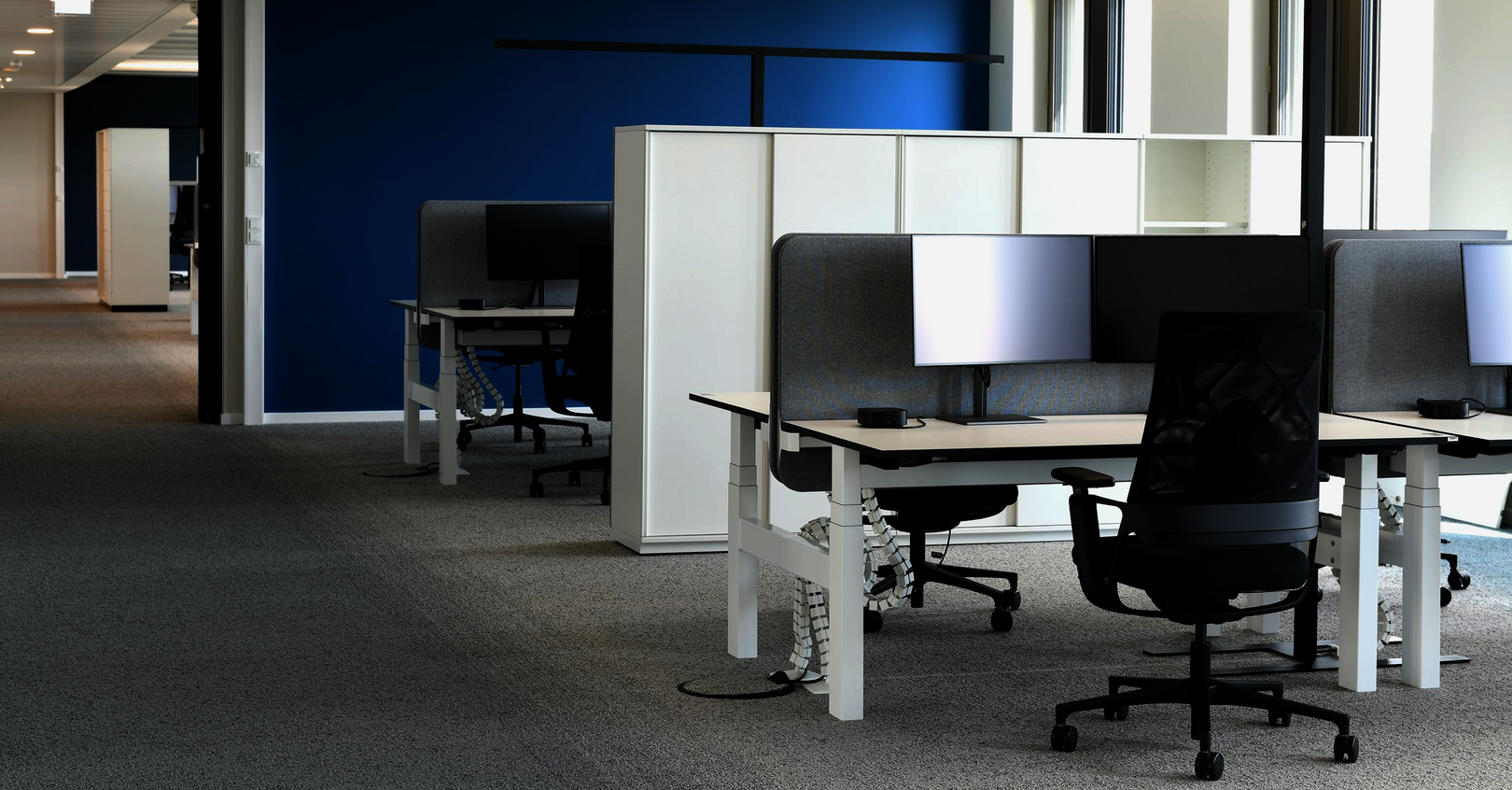
The WINEA ECO tables in Maersk’s inventory have already been in use for over ten years at this point; they were procured through our specialist retail partner Gärtner in Hamburg, which is also implementing the new project. Thanks to their built-in technology, the electrically height-adjustable tables operate smoothly, and replacement parts are available. The key question, therefore, is not “What should we buy new?” but “What can we keep?”
On-site Refurbishment
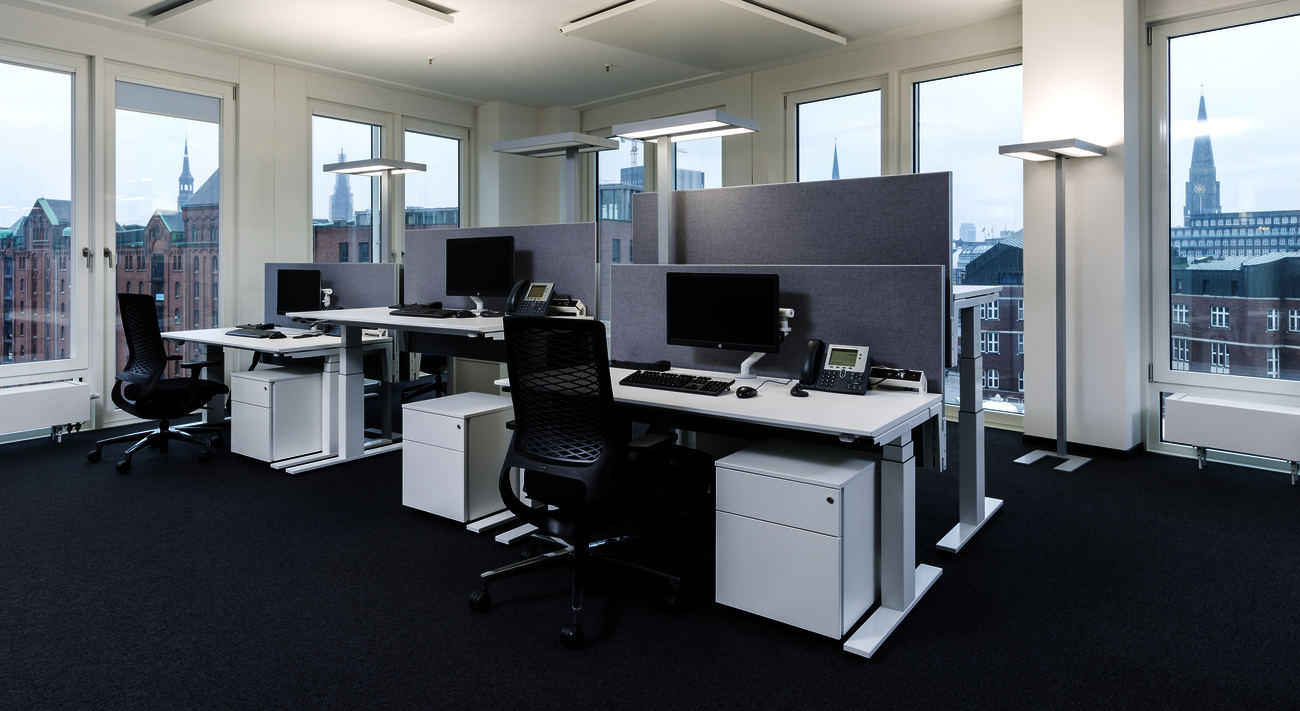
About 400 of these tables will not be replaced but refurbished on site. Two components will be replaced: the old tabletops will be replaced with new SARA tabletops, and the control elements will be upgraded to a newer generation. This is made possible by the tables’ modular design and the high-quality, upwardly compatible control system.
The removed tabletops are returned to the resource cycle, while the frames remain in use.
400 new jobs created from recycled scrap wood
To accommodate the additional space requirements, approximately 400 new workstations from the WINEA FLOW series—including storage space—will be added. In total, there are about 800 workstations, half of which are made from refurbished stock. All new tabletops and cabinet bodies are also made from SARA material, a particleboard composed of 100% recycled scrap wood.
The new furnishings thus require no freshly harvested wood and are fully recyclable: the panels can later be used to produce new SARA panels.
Benefits of a Regional Network
On-site panel replacement requires a well-coordinated network with short lines of communication: specialty retail partners, installers, manufacturers, and recycling companies. Gärtner coordinates on site, WINI supplies panels, control elements, and replacement parts, and the removed materials are returned to the recycling loop.
Our goal is to build furniture in such a way that it can be refurbished and reused after ten years or more. This is precisely what circular design is all about: durable systems, replaceable components, and materials that remain in the cycle.
Living the Cycle
This WINI Case demonstrates what a modular design, repairability, and high-quality, readily available replacement parts can achieve over the product’s lifespan: furniture can be refurbished after more than ten years instead of being discarded. A pragmatic approach to what’s already there. Assess existing stock, refurbish, add to it, and recycle materials: that’s how the circular economy works in practice.
Review the current situation, explore options
The best way to determine whether your existing inventory can be refurbished and supplemented with recyclable workstations is through a direct conversation. Talk to us about refurbishment options for your facility, or work with your specialty retailer to assess what can be kept, renewed, and returned to the cycle.
We are happy to answer your questions. How can we support you?

We are happy to answer your questions. How can we support you?
Jürgen Jordan
Head of Consulting and Architectural Consultancy
Quick Search
- WINEA FLOW – Desk
- WINEA ECO – Desk
- WINEA PRO – Desk
- WINEA FLOW MEET – Folding table
- WINEA FOUR – Desk
- TWISTER – Folding table
- WINEA STARTUP 2.0 – Desk
- WINEA TEAMS – Desk
- WINEA MAXX – Cupboard
- WINEA MAXX – Modular shelving unit
- WINEA MAXX – Pharmacy Cabinet
- WINEA MAXX – Lockers
- WINEA MAXX – Shelving unit
- WINEA MATRIX – Cupboard & Sideboard
- WINEA FLEX UP – Whiteboards & Workshop furniture
- WINEA VISTA – Media stand
- CONTAINER
- MEETING TABLES
- WINEA SLIM – Storage space
- WINEA ELEMENTS – Central zones
- WINEA SONIC – Acoustic wall
- WINEA SINUS – Acoustic wall
- WINEA X – Room divider
- WINEA FLEX UP – Room divider
- HYGIENE WALLS
- WINEA ID – Counter
- WINEA TOOLZ MYBOX – Storage space
- WINEA TOOLZ MYKIT – Storage space
- FIRE EXTINGUISHER COVER
- Workshop furniturel– for workshops & project spaces
- SARA Board – Board made from 100% waste wood
- WINI MOTION – innovative control element
- Service & Support
- Configurator
- References
- WINI News
Ansprechpartner*innen finden

Janina Richter
Salesteam

Dirk Dienst
Vertriebsteam

Das WINI Service-Team ist werktags
von 8 bis 16 Uhr persönlich für Sie da.
Robin Hau
Objektteam

Jürgen Jordan
Leiter Consulting und Architekt*innenberatung

Vanessa Veith
Marketing + Kommunikation