What are DPP & UPID
and why are they becoming increasingly important?
Today's furniture buyers want more than just good design—transparency, sustainability, and service are playing an increasingly important role. With the Unique Product Identifier (UPID) and the Digital Product Passport (DPP), WINI is laying the foundation for just that: a digital identity for every piece of furniture. Read this article to find out what this entails and what added value it brings for customers, retailers, and manufacturers.
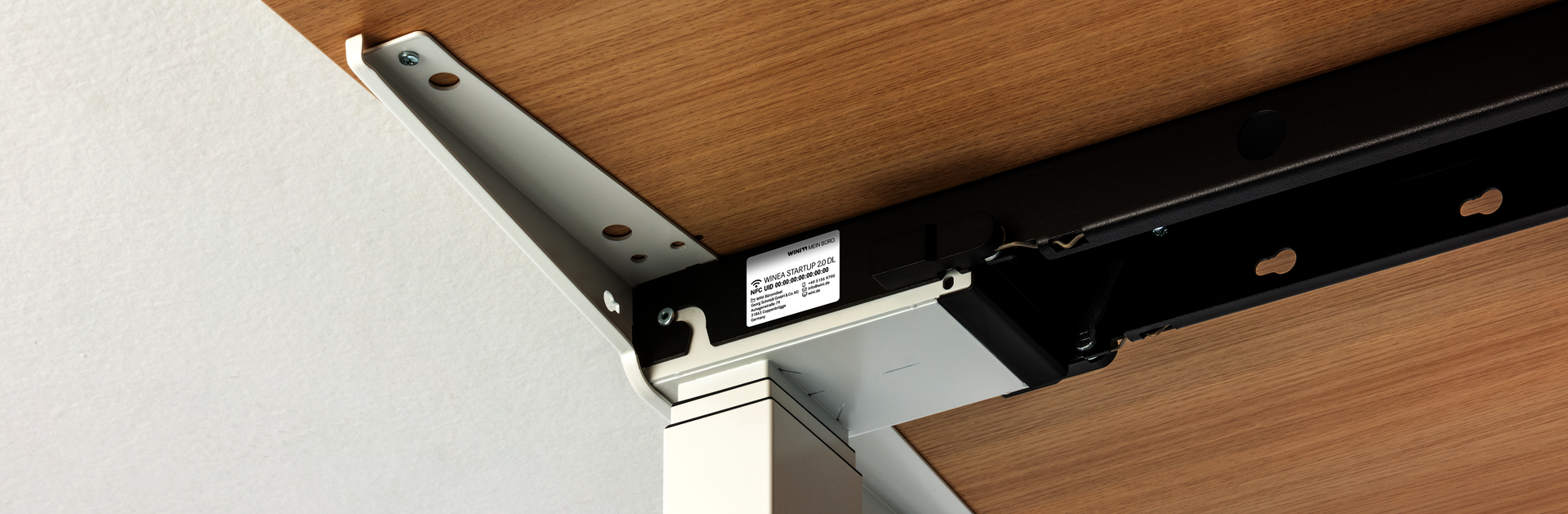
The UPID allows every piece of furniture to be tracked seamlessly from the manufacturing process through storage and transport to sale. The biggest advantage is that every item can be traced throughout the entire supply chain – from the factory to the end consumer. If, for example, a quality problem arises, WINI can use the UPID to determine exactly which product is affected and whether it is still within the 10-year warranty period.
The UPID serves as the key to a digital collection of all relevant product data. This digital product file (also known as a digital product passport/DPP) stores information about the product, such as material composition, manufacturing details, instructions for use, certificates, and sustainability data. The unique ID creates a digital twin of the physical piece of furniture, which is carried throughout its entire life cycle. This creates transparency and makes it possible to access the product data at any time.
Each of our pieces of furniture has a story – from production to the end of its useful life. With the DPP, we make this story visible: transparent, digital, and accessible at any time. Since February 2025, WINI furniture has carried a UPID NFC label that provides direct access to all important product data.
Customers can access product details directly with their smartphones via the attached code (in the case of WINI, an NFC tag on the furniture). This means that assembly instructions, care instructions, and technical data are available digitally at any time. Buyers no longer have to spend long periods leafing through paper manuals—a quick scan is all it takes to access the digital product file.
When spare parts are needed, the UPID makes it much easier to procure them. Instead of manually searching for the correct part number, the customer scans the UPID NCF label. This minimizes the identification effort and reduces the error rate when ordering parts. For manufacturers and retailers, this boost to the spare parts business can mean improved customer loyalty.
WINI values sustainable materials and transparent supply chains. The unique identifier can be used to access a digital product passport that provides information about the origin of the raw materials, the recycled content, or the product's certifications. When consumers can see details about the origin and material composition of their furniture, it builds trust and prevents accusations of greenwashing. Sustainability data can thus be provided in a customer-friendly manner. The buyer can be certain about the quality and environmental impact of their product and can make informed decisions.
All relevant purchase data is linked via the ID, so that in the event of a warranty claim, it can be quickly checked whether and when the product was purchased. This makes it much easier to manage consumer warranties. Even years after purchase, customers can still get support via the UPID—for example, by the manufacturer offering matching surfaces or add-on modules that fit exactly with the original furniture system.
All items can be clearly recorded and tracked in the ERP/merchandise management system. This facilitates inventory control, as goods receipts and issues are recorded accurately. Once each product has a unique identifier (UPID), it can be tracked across distribution networks and warehouses all the way to the customer. This seamless traceability supports inventory replenishment and distribution because the location of each item is always known.
In logistics, the UPID enables automated shipment tracking. Each piece of furniture can be scanned during loading, transport, and goods receipt, allowing seamless documentation of transfers between warehouse, shipping company, and retailer. This speeds up processes and reduces errors, as mix-ups are eliminated. All parties involved in the supply chain can use the same identification system, which makes collaboration more efficient (purely internal labeling is often not sufficient for the entire chain).
In the event of any complaints, the unique identifier helps to identify the furniture immediately. This means that the complaint process can be handled much more quickly. With recording the UPID, it also ensures that the complaint relates to the product that was originally delivered. Overall, this reduces the amount of manual checking required and means that repairs or replacements can be carried out more quickly.
UPID tracking documents which customer has received which item. In the event of product defects or safety-related problems, the manufacturer can specifically inform affected retailers and end customers. Maintenance and service processes (e.g., for technically sophisticated office furniture) also become more efficient, as service technicians can use the UID to call up the exact model with all technical specifications and identify suitable replacement parts.

Die praktischste Umsetzung eines UPID für den Endnutzenden sind NFC-Etiketten auf dem Produkt oder dem Typenschild. WINI versieht seine Möbel mit einem kleinen UPID NFC-Etikett. Wird dieses Etikett gescannt, führt es den Benutzenden direkt zu einer Web-Seite mit der digitalen Produktakte im Servicebereich von wini.de. Hier kann der digitale Produktpass des Möbels eingesehen werden – inklusive der hinterlegten Daten wie Aufbauanleitungen, Ersatzteilübersichten oder Nachhaltigkeitsinformationen.
Da moderne Smartphones NFC-Tags sofort erkennen, ist der Zugang niedrigschwellig. Wichtig ist, dass das Etikett mit dem Chip dauerhaft mit dem Möbelstück verbunden ist (z. B. unter der Tischplatte oder an der Innenseite eines Schrankes), sodass die Identität des Produkts jederzeit ausgelesen werden kann.
Über digitale Service-Portale können Hersteller, Händler und Endkunden den UPID nutzen, um Informationen auszutauschen und Mehrwertdienste anzubieten. Ein Händler kann etwa via Online-Portal die Produkt-ID einscannen und erhält sofort alle für die Bestellung oder Reklamation relevanten Daten. Endkunden wiederum erhalten Informationen zur Montage und Fehlerbehebung oder Tipps zur Verlängerung der Lebensdauer ihre Möbels. In der Industrie 4.0 spielt zudem die Verwaltungsschale (Asset Administration Shell) eine Rolle: Hierbei wird jedem physischen Produkt ein digitaler Zwilling zugeordnet, der über den gesamten Lebenszyklus mitläuft.
Diese Konzepte setzen voraus, dass eine zwingend eindeutige Identifizierung jedes Produktes gewährleistet ist – eine Anforderung, die perspektivisch auch durch EU-Vorgaben (Stichwort digitaler Produktpass) vorgeschrieben wird.
Let's talk today about your working world of tomorrow.

Quick finder
- WINEA FLOW – desk
- WINEA ECO – desk
- WINEA PRO – desk
- WINEA FLOW MEET – folding table
- TWISTER – folding table
- WINEA STARTUP 2.0 – desk
- WINEA PLUS – cheek board
- WINEA TEAMS – table system
- WINEA MAXX – shelf
- WINEA MAXX – filing cabinet
- WINEA MAXX – locker
- WINEA MAXX – Regal
- WINEA MATRIX – cupboard & sideboard
- WINEA FLEX UP – whiteboards & workshop furniture
- CONTAINER
- BESPRECHUNGSTISCHE – meeting tables
- WINEA SLIM – storage space
- WINEA ELEMENTS – central areas
- WINEA SONIC – acoustic wall
- WINEA SINUS – acoustic wall
- WINEA X – Raumteiler
- WINEA FLEX UP – room divider
- HYGIENEWÄNDE - hygienic walls
- WINEA ID – counter
- WINEA TOOLZ MYBOX – storage space
- WINEA TOOLZ MYKIT – storage space
- Workshopmöbel – for workshops & project rooms
- SARA Platte – board made from 100% waste wood
- WINI MOTION – innovative control element for desks
- Service & Support
- Konfigurator
- References
- WINI News
- Career•
Find contact persons


Janina Richter
sales team

Dirk Dienst
sales team

Hanna-Maria Grewe
Planning + Interior Design

The WINI service team is available to assist
you in person on weekdays from 8 a.m. to 4 p.m.

Robin Hau
property team

Jürgen Jordan
Head of Consulting and Architectural Consultancy

Vanessa Veith
Marketing + Communication