How much does a desk really cost?
The office furniture market is under enormous price pressure. At first glance, aggressively priced offers seem unbeatable—after all, when it comes to purchasing, often only one figure counts: the purchase price.
But: An electric motor-powered height-adjustable desk is not a disposable product. Those who compare only the purchase price are making a one-dimensional assessment – and overlooking the fact that "cheap" can quickly become "expensive" when viewed over the entire service life.
Think in terms of life cycle rather than purchase price
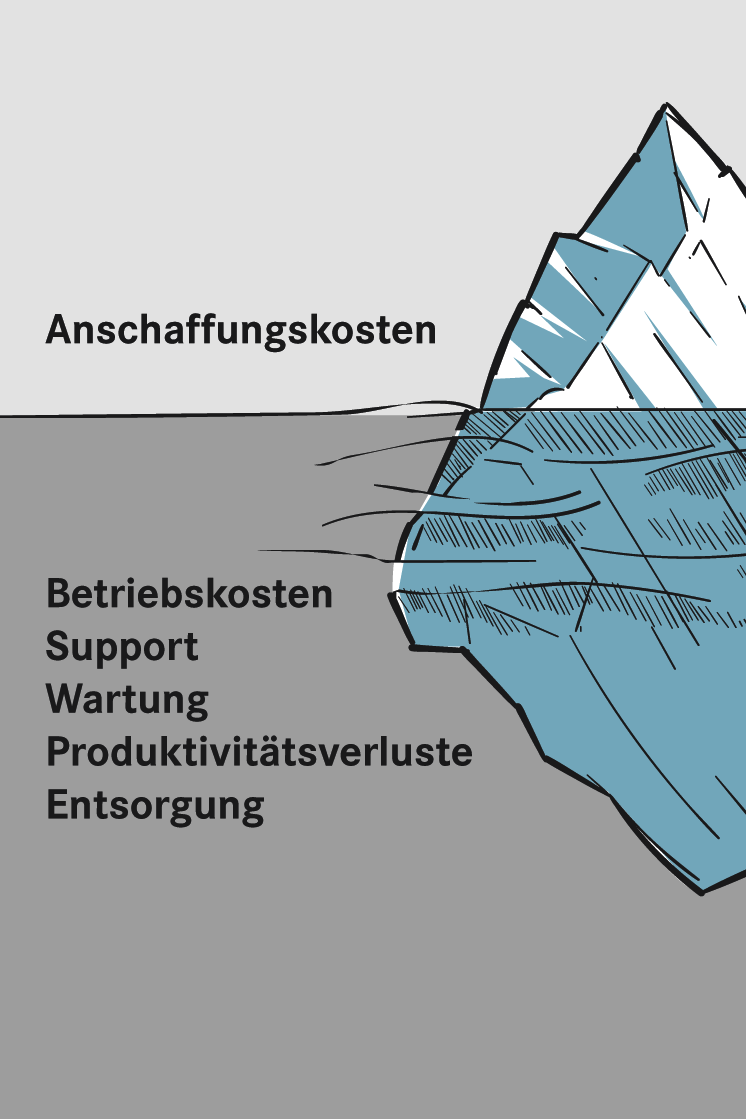
In business administration, there is a suitable term for this: total cost of ownership (TCO) – meaning the total costs over the period of use. This refers to everything a product costs over its lifetime – not just the purchase price.
For an electric motor-powered height-adjustable desk (let's assume a useful life of 15 years), this typically includes:
- Purchase price
- Breakdowns (if something jams, wobbles, or breaks down and the workstation is therefore unusable)
- Repairs & replacement parts (are they (still) available – at what price and how quickly?)
- Convertibility (e.g., in the event of team changes, relocation, space consolidation)
- Residual value & secondary use (pass on internally, refurbishment, resale)
- Disposal (effort, costs, recyclability if applicable)
Do you want the lowest purchase price—or the lowest costs over the service life?
Longest possible service life
Good repairability
Convertibility possible
Recyclability of materials
Extend the service life – instead of buying twice
A cheap table with particularly inexpensive components (e.g., drive or control system) may work. But the question is not "does it work today?" but rather: How long will it remain stable, quiet, safe, and usable? If a table needs to be replaced after 5 to 7 years, you will have to buy it twice or even three times in 15 years. The supposed price advantage melts away – or even reverses.
Focus on repairability – instead of complete replacement
Repairability means that defective parts (e.g., tabletop, legs, control unit, drive, cables, control system) can be replaced without disposing of the entire product. This is becoming increasingly relevant politically: with the Ecodesign Regulation (EU) 2024/1781, the EU has created a framework for setting sustainability requirements such as durability, repairability, and recyclability for many products in the future. (Whether and when furniture will be specifically affected depends on future product requirements – but the direction is clear.)
The US Environmental Protection Agency also describes how the EU has already introduced repairability requirements for certain product groups in order to promote longer use.
Plan for convertibility – because offices change
A table that can be adapted saves you from having to buy a new one. Furniture has to live with the office, and offices change: spaces are getting smaller, teams are growing, working methods are changing... Convertibility means, for example:
- Changing table tops or replacing frames
- Retrofitting attachments
- Adjusting cable management
- Replacing standardized components
Take advantage of recyclability – and secure residual values
WINI furniture is designed so that it can be returned to a useful cycle at the end of its service life – through reuse, refurbishment, or recycling. This is not only a sustainability issue, but also an important cost factor: those who can increase residual values reduce the effective life cycle costs.
A mathematical experiment:
What does "cheap" cost over 15 years?
Let's compare two functionally comparable electric motor height-adjustable desks:
- A (low purchase price, but wobbly/noisy/defective after 6 years, difficult to obtain replacement parts)
- B (WINI, possibly higher purchase price, usable for at least 15 years, repairable, components replaceable)
If A has to be replaced twice in 15 years, not only will two additional purchases have to be made, but also: 2x costs for procurement & organization, 2x delivery/assembly/disposal, greater risk of failure, and often less residual value.
B is purchased once and, at the end of its useful life, can perhaps be reused internally elsewhere, refurbished, or resold.
This suddenly makes "more expensive" economical.
Consider it from a tax perspective: depreciation is not the same as service life.
Companies do not deduct the entire cost of an asset in the year of purchase, but spread it over its normal useful life. For office furniture, the official depreciation table (AV) specifies a useful life of 13 years. What does that mean in practical terms?
- A high-quality desk fits in with the logic of depreciation: costs are spread over years, while the table continues to be used.
- If the table can be used for longer (e.g., 15 years), it remains in use even after the end of the depreciation period—the benefit continues even though the purchase has already been written off for tax purposes. This is economically attractive.
(Note: For details such as GWG limits, special depreciation, or individual useful lives, which depend on the individual case, please consult your tax advisor.)
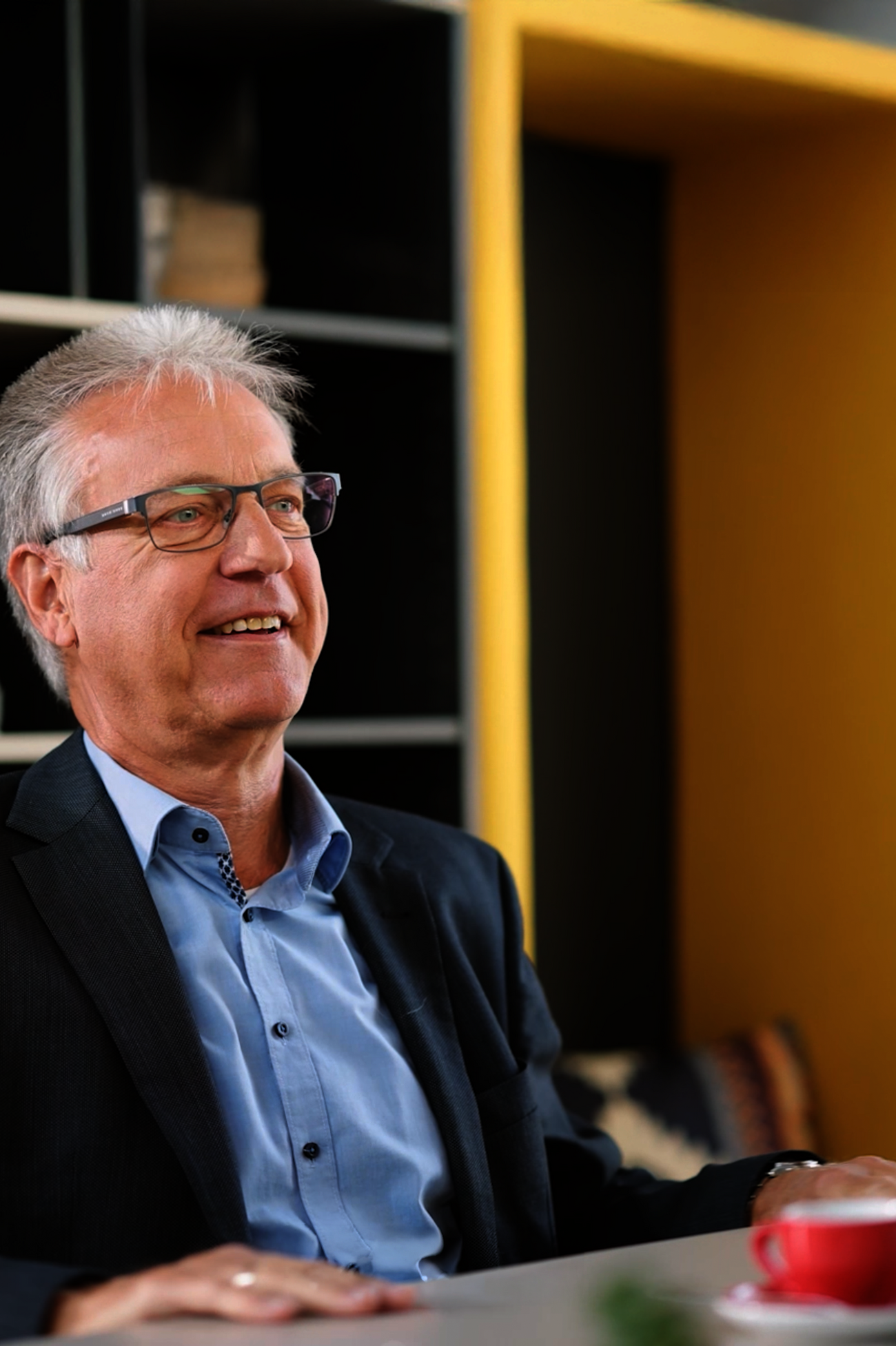
Make decisions that will have a lasting impact for years to come
When you choose a high-quality, height-adjustable desk from WINI, you are not just buying metal, a tabletop, and a motor—you are buying, above all,
- Predictability (10-year availability guarantee, 10-year long-term warranty for commercial users)
- Productivity (fewer breakdowns, better utilization)
- Adaptability (the office is changing)
- Stable value (secondary use, refurbishment, recycling)
The crucial question is therefore: Do you want the lowest purchase price – or the lowest costs over the service life? Cheap is often only the starting price. What is economical is what remains good for a long time – and can be maintained.
Let's talk about it—we look forward to hearing from you.
We are happy to support you and answer your questions.

We are happy to support you and answer your questions.
Robin Hau
Counselling and offers
Quick finder
- WINEA FLOW – desk
- WINEA ECO – desk
- WINEA PRO – desk
- WINEA FLOW MEET – folding table
- TWISTER – folding table
- WINEA STARTUP 2.0 – desk
- WINEA PLUS – cheek board
- WINEA TEAMS – table system
- WINEA MAXX – shelf
- WINEA MAXX – filing cabinet
- WINEA MAXX – locker
- WINEA MAXX – Regal
- WINEA MATRIX – cupboard & sideboard
- WINEA FLEX UP – whiteboards & workshop furniture
- CONTAINER
- BESPRECHUNGSTISCHE – meeting tables
- WINEA SLIM – storage space
- WINEA ELEMENTS – central areas
- WINEA SONIC – acoustic wall
- WINEA SINUS – acoustic wall
- WINEA X – Raumteiler
- WINEA FLEX UP – room divider
- HYGIENEWÄNDE - hygienic walls
- WINEA ID – counter
- WINEA TOOLZ MYBOX – storage space
- WINEA TOOLZ MYKIT – storage space
- Workshopmöbel – for workshops & project rooms
- SARA Platte – board made from 100% waste wood
- WINI MOTION – innovative control element for desks
- Service & Support
- Konfigurator
- References
- WINI News
- Career•
Find contact persons

Janina Richter
sales team

Dirk Dienst
sales team

Hanna-Maria Grewe
Planning + Interior Design

The WINI service team is available to assist
you in person on weekdays from 8 a.m. to 4 p.m.

Robin Hau
property team

Jürgen Jordan
Head of Consulting and Architectural Consultancy

Vanessa Veith
Marketing + Communication